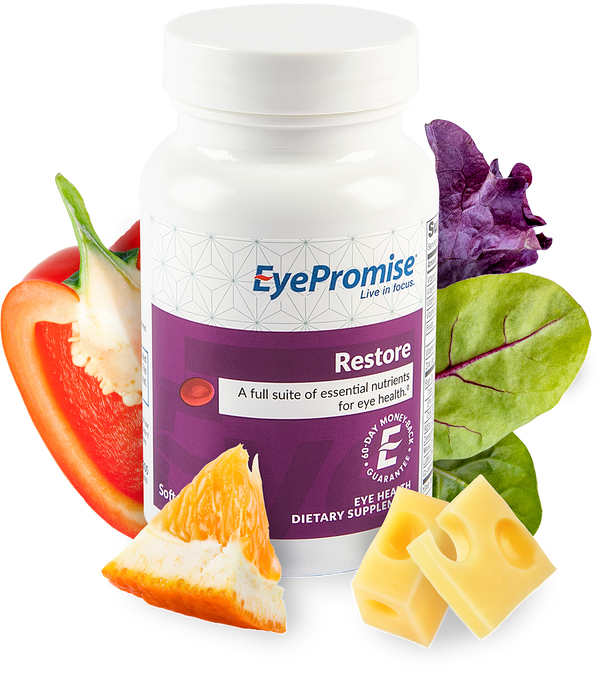
EyePromise Restore

For at-risk & early AMD patients, EyePromise are the best eye vitamins for macular degeneration:

EyePromise® eye vitamins feature a 60-day money-back guarantee.
Should you have a problem or issue with any of our products, simply call our Customer Support team toll-free at 866-833-2800, or drop us an email at support@eyepromise.com, and we’ll issue you a full refund or provide an exchange if so desired.
Daily recommended dose is one or two softgels.
EyePromise Restore rebuilds macular pigment, a key risk factor of Age-related Macular Degeneration (AMD), the leading cause of blindness of over age 55 affecting more than 15 million people. AMD destroys central vision, has no cure, and is irreversible.
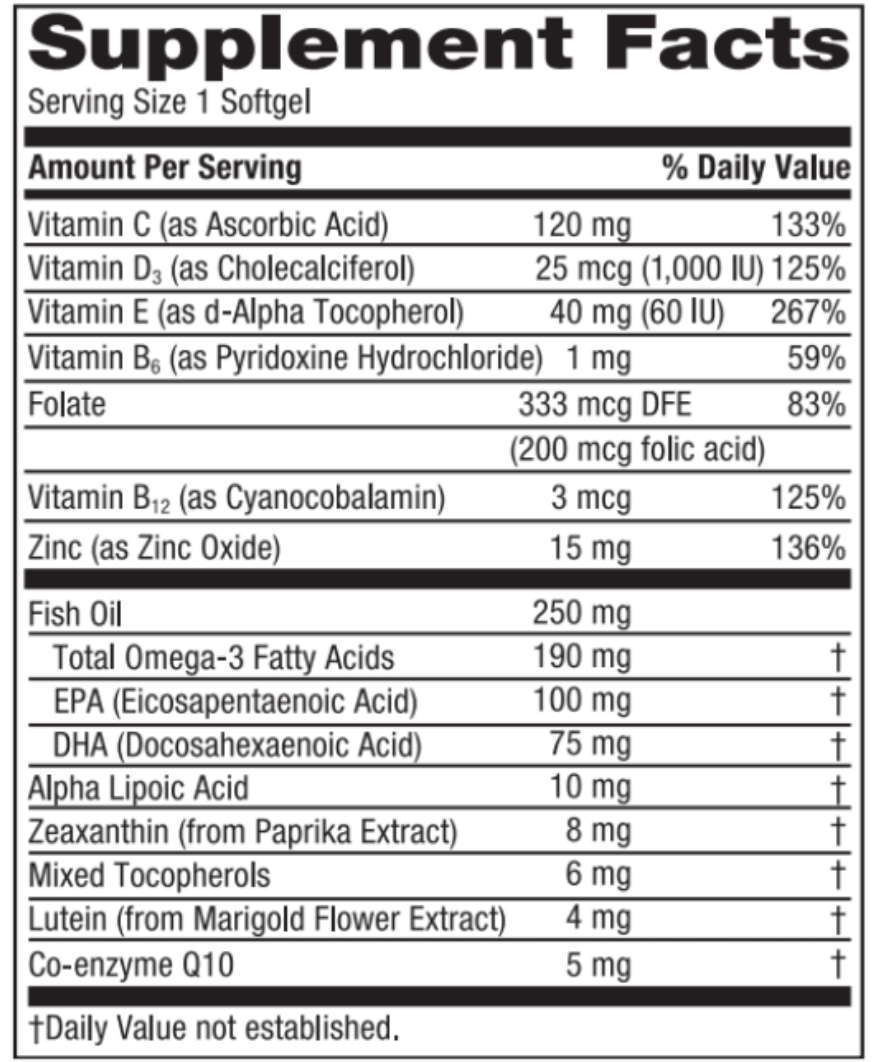
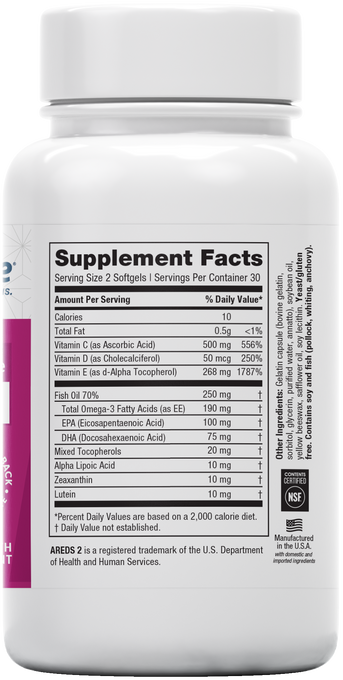
There is a natural 2:1 ratio in the fovea, which is in the center of macula in the back of your eye. Studies show that 2 EyePromise Restore can increase macular pigment up to 54%. Zeaxanthin is very difficult to get through the average US diet, and 1 Restore softgel has the same amount of Zeaxanthin as approximately 20 ears of corn!
More than 300 studies have been published on nutrition, macular pigment, and MPOD (macular pigment optical density) testing, and 50 of the most recent and relevant abstracts can be found on our corporate website. Click here to go there now.
Results may be patient dependent, however many patients report reduced sensitivity to bright light or photophobia, increased contrast sensitivity, increased color saturation, improved fine detail discrimination, improved night vision and night driving, better visual acuity, and better dark adaptation. Healthy macular pigment level has also been scientifically demonstrated to reduce risk of age-related eye disease.
EyePromise is manufactured to the FDA government cGMP (current Good Manufacturing Practice) standard to ensure the highest quality production standards. All ingredients are evaluated for purity, composition, strength, and quality. Testing occurs before, during, and after manufacturing. ZeaVision also conducts third party analysis of finished product to ensure EyePromise content is consistent with product labeling. (See quality statement on ZeaVision website; www.zeavision.com)
The level of dietary Zeaxanthin in EyePromise is patent protected and the highest level available. The Zeaxanthin in EyePromise is an all natural form of dietary Zeaxanthin. Zeaxanthin is less common in the average diet than lutein and EyePromise is uniquely designed to fulfill this important need. EyePromise has the right mix of ingredients scientifically demonstrated to be
essential for healthy vision.
Vitamins C and E are powerful antioxidants; Omega 3 is an important constituent of the retina modulating inflammatory processes; Zinc is involved in enzyme catalytic function and metabolism; Zeaxanthin is a superior photo-protectant and antioxidant; Lutein is also a photo-protectant and antioxidant and Alpha Lipoic Acid is another powerful antioxidant that
recycles vitamins C and E.
If the consumer is allergic to shellfish or seafood or they are taking a large number of other vitamins contained in EyePromise Restore, a Zeaxanthin only supplement may be preferred. For instance, if one is taking an eye supplement with a low level of Zeaxanthin or no Zeaxanthin, adding EyePromise 10mg. to one’s daily supplement regimen may be desirable.
The original AREDS formula contains a high level of zinc. (80mg zinc oxide) At this zinc level, copper must be added to a supplement formulation to minimize the risk of copper deficient anemia. This is the reason copper was added to the original AREDS formulation. The AREDS II formulation contains a reduced zinc level of 25mg. because of the original AREDS study findings. EyePromise Restore contains only 15mg of zinc per softgel to mitigate these concerns and is safe to take with a multi-vitamin containing zinc. The recommended upper daily level of zinc is 40mg.
The AREDS I supplement formulation contained a high level of beta carotenewhich was found to increase the risk of lung cancer in previous or current smokers. EyePromise contains no beta carotene. EyePromise contains a low level of zinc at 15mg vs. the 80mg level in the AREDS formulation. High levels of zinc can cause G.I. upset, genitourinary complications and it has been implicated in prostate issues, as well as, Alzheimer’s. EyePromise also contains Zeaxanthin, alpha lipoic acid, Omega 3, lutein, and mixed tocopherols scientifically demonstrated as important to healthy vision. These ingredients are not found in the AREDS I formulation. However, zeaxanthin, lutein and omega 3’s were thought to be important enough to include them in the new AREDS II study, currently underway. Results from that trial are not due until 2015.
ZeaVision sells EyePromise in the professional channel where Eye Care Professionals can properly explain the benefits of specific supplement ingredients and proper quantity to maintain healthy vision. Retail stores typically sell a confusing array of eye supplements and it’s often very difficult to identify important differences between products.
First, by demonstrating on successive MPOD testing that their macular pigment has increased. With use of the QuantifEye device, the benefit of taking a supplement can be demonstrated. Eye Care Professionals should contact patients shortly after their initial visit to determine whether the patient is complying with your supplement recommendation. This will also allow the Eye Care Professional to assess whether the patient has experienced any functional improvements such as reduction of photophobia,
improved glare recovery and night driving, contrast improvement, increased color saturation, night vision, dark adaptation or going from a lighted room into a dark room. Any positive experience reinforces supplement
compliance.
Patients diagnosed with AMD should take EyePromise Restore. If you feel compelled to offer an AREDS formula to these patients, it is recommended that you add EyePromise 10mg. to the patient’s supplement regimen as the AREDS formula contains no Zeaxanthin. Zeaxanthin was not commercially available when the AREDS I formulation was developed. Over the past decade
significant science has demonstrated the importance of Zeaxanthin for AMD patients.
Animal research suggests that Zeaxanthin prevents diabetes-induced increases in retinal damage and increases in VEGF and ICAM-1. EyePromise Restore contains the highest available level of dietary Zeaxanthin.
EyePromise supplements should be taken with a meal, preferably a meal that contains at least a small amount of fat, such as a piece of buttered toast.
Although the safety of much higher daily doses has been documented, ZeaVision only recommends the dosages listed in the label; one or two EyePromise softgels or one EyePromise 10mg. veggie cap per day. The Joint Expert Committee on Food Additives (JECFA), the scientific advisory body to the Codex Alimentarius Commission, has set the acceptable daily intake for the antioxidant ingredients, alone or in combination, at up to 2 mg per kilogram of body weight. This means for a 160lb./72.6 kg person, approximately 145 mg of lutein/zeaxanthin would be considered safe. That said, ZeaVision recommends a maximum dose of two EyePromise softgels per day, a combined dose of 24mg of Zeaxanthin and lutein.
Yes, EyePromise Restore is scientifically formulated with that in mind and it is recommended that the patient take a multi-vitamin each day along with EyePromise.
Consult with your eye care and family doctor regarding consumption of EyePromise if under the age of 18. It is believed much of the eye damage that manifests late in life occurs during our younger years. Mounting evidence also suggests that consuming Zeaxanthin may provide functional improvements. Some patients report these improvements within six months
of beginning EyePromise supplementation. Improvements such as reduced light sensitivity, increased contrast sensitivity with more saturated colors, improved night driving and overall night vision are reported. Adults should follow the dosage recommendation provided on the label.
250 mg. of fish oil per day is consistent with 2 servings of cold water fish consumption per week, the recommended weekly dietary intake. All EyePromise ingredients are the highest available quality. In spite of the associated cost related to high quality, ZeaVision is focused on minimizing per serving cost to consumers while providing a formulation that delivers optimal eye protection. Additionally, adding more fish oil would increase the number of softgels required daily and significantly increase the size of the softgel, both of which are undesirable. In general, ZeaVision agrees more Omega 3’s would be healthy; however, ZeaVision balanced consumer cost, softgel size, and required softgel servings per day to meet the needs of the majority of consumers. EyePromise is scientifically formulated with the right ingredients and dosage to provide optimal eye health benefits, at a low cost.
Refer the doctor to the ZeaVision website. (www.zeavision.com) If they have specific questions, ask them to contact ZeaVision (314) 628-1000 and ask for Chris Barber or Dr. Dennis Gierhart.
To maintain your macular pigment level after you reach the desired level, you must continue to take EyePromise. Once you achieve the target level, your doctor may lower your prescription to one softgel per day if you were taking two softgels. If you stop taking EyePromise your macular pigment level will return to your baseline level over time. Additionally, you should make the
lifestyle changes your doctor recommends to receive the maximum benefit of EyePromise.
The macula contains both lutein and Zeaxanthin and the eye preferentially accumulates Zeaxanthin in the center of the macula where the highest density of visual cells reside. Supplementing with lutein will increase macular pigment; however, the most crucial area of the macula may have deficient protection without Zeaxanthin and recent science demonstrates unique differences between the two carotenoids.
The FDA does not approve vitamins and supplements. Three Zeaxanthin safety studies have been conducted and submitted to the FDA and approval obtained. ZeaVision takes safety and quality very seriously.
The decision to incorporate a 2:1 Zeaxanthin to lutein ratio in EyePromise is based on the actual ratio in the center of the macula rather than the AREDS II formulation which contains a dietary ratio of 5:1 lutein to Zeaxanthin. Although lutein is more readily available than Zeaxanthin in the diet, the eye still chooses to place a 2:1 ratio of Zeaxanthin to lutein in the center of the macula, the area with the highest concentration of visual cells.
Zeaxanthin and lutein are molecularly similar however they each orient themselves differently in the cell with Zeaxanthin having two ends reactive for antioxidant activity, and lutein only one. The deposition of these antioxidants in the eye varies as Zeaxanthin is in higher concentration in the cone rich center of the macula and lutein is in higher concentration in the peripheral area of the macula. The eye preferentially deposits Zeaxanthin in the fovea, suggesting a distinct and different role for each.
Meso-zeaxanthin is a stereoisomeric form that is ONLY found in the macula of the eye. It is not found in the blood stream, other organs, or food supply. Human safety data on meso-zeaxanthin has not been submitted to the FDA. Meso-zeaxanthin is not in the food chain. Some indicate meso zeaxanthin is found in the skin of an Asian fish, or in the carpace (shell) of a crustacean, but not in the food supply. Since human safety studies have not been conducted, long term effects of ingesting meso-zeaxanthin are unknown. Furthermore, marketed meso-zeaxanthin is synthesized by a harsh chemical treatment of lutein, thus meso-zeaxanthin is synthetic.
Both carotenoids provided in EyePromise are derived from natural sources. The Lutein utilized in EyePromise is derived from marigolds and the Zeaxanthin is derived from red paprika peppers. Meso-zeaxanthin is not natural.
Meso-zeaxanthin is not in the food supply, nor is it found in human blood or organs. All marketed supplements containing meso-zeaxanthin contain synthetic meso-zeaxanthin, created by a harsh chemical treatment of lutein. The long-term effect of ingesting meso-zeaxanthin is not known. Mesozeaxanthin is only found in the macula of the eye and it is theorized that
meso zeaxanthin it is created by lutein conversion into this intermediate molecule. It is hypothesized that meso-zeaxanthin is created when the eye doesn’t obtain adequate dietary zeaxanthin. No meso zeaxanthin human safety studies have been filed with the FDA.
Yes, the technology has been scientifically validated in multiple clinical studies. These studies may be reviewed in the research tab of the ZeaVision website. (www.zeavision.com) As the exam is “psychophysical”, there may be very slight variance from test to test, however measurement results should not vary more than .05 on average. More importantly, the software generates a graph for each patient so the operator knows if the patient understands the exam and is responding to the target appropriately. This is vital to achieving accurate results and the QuantifEye device is unique in this regard. It is important to position the device in the practice where there will be minimal distractions while the patient is taking the exam. The operator should also remind the patient to blink frequently during the exam.
Call David Taylor at (314) 628-1000 or his direct number (314) 415-1307.
Central graphs typically appear as a “stretched-out S” on its side or a broad “U” shape, like a necklace. A key indicator of a good graph is a clearly defined minimum point on the chart line. Although all data points do not have to be directly on the data average line, multiple and significant variations are indications of a patient not pushing the button at the same time, each time they begin to see the flicker. This may result from the patient trying to anticipate the flicker or they do not truly understand the instructions. The patient should be reminded to press the response button when the target first begins to flicker and they should repeat the exam, should the graph be unacceptable. When in doubt, test again to validate the results. You can also contact ZeaVision for printed graph interpretation training materials and assistance.
If the graph line goes up at or near a 45 degree angle, this generally indicates that the patient has extremely low macular pigment and their starting point is the minimum value because they have little or no absorption of blue light. (very rare) Test again to see if this is repeated. If the same result is obtained, the patient should be prescribed two EyePromise® softgels per day and return for re-measurement in six months. Adequate pigment build should occur during this time to achieve a reading. For the graph line that trends down at or near a 45 degree angle and never turns up, this generally means the patient has very high macular pigment. The test may time out, as the graph never turns up to form three consecutive points up. Repeat the test and ask the patient to enhance their concentration to obtain a result. If a measurement cannot be achieved (very rare) an assumption of high macular pigment should be made. The patient may or may not need EyePromise® supplementation dependent upon other AMD risk factors and their retinal exam.
Data collected from clinical studies and QuantifEye devices suggests a macular pigment density level below .25 is low, .26 to .45 is the defined mid range, and a macular pigment density of .45 and above is high.
The patient should visit their eye care professional to obtain a baseline macular pigment level reading and repeat the measurement every six months until the macular pigment level reaches .45. After the patient’s macular pigment level reaches the target level, the eye care professional will recommend continued EyePromise supplementation to maintain a healthy level, and schedule future measurements based on individual patient needs.
Patients with low macular pigment will generally begin to notice positive changes after initiation of supplementation with EyePromise after 3 to 6 months. Measureable macular pigment improvement can be obtained at 6 months, if the patient has been compliant taking EyePromise Restore.
The macular pigment scale is 0 to 1. The macular pigment density average in the US population is .34. Approximately 43% of the US population is reported to have low macular pigment, meaning they are below the US average. Based on extensive data collection, .45 is the desired target level as this is the high end of the mid range and low end of the top tertile. Data suggests that 80% of the US population is below the preferred macular pigment level of .45. The ever increasing diagnosis and prevalence of Age Related Macular Degeneration (AMD) suggests that the US macular pigment average is not adequately protecting eyes. It is estimated that 15 million Americans have some degree of AMD.
Data demonstrates an average macular pigment increase of 54% after 6 months of EyePromise Restore ingestion.
If the intraocular lens implant is one of the “yellow” lens used for protection against UV light, a peripheral reading must be performed to obtain an accurate reading, as the yellow in the lens will be additive to the macular pigment.
Perform a peripheral measurement in addition to the central measurement or set the patient’s age at 21years in the software program. Setting the patient’s age at 21 years of age in the software program is the preferred approach as a central measurement will suffice.
Any contact lens that has more than “handling tint” needs to be removed before the exam. Handling tint does not affect exam accuracy and the patient may wear their contact lenses. However, if the patient has cosmetically tinted contacts, they need to be removed prior to the evaluation.
Patients may wear their correction or not, whatever feels the most comfortable for them. In most cases, the patient will feel more comfortable when they can see clearly, whether with or without correction. Colored lenses (contacts or glasses) beyond handling tint for contacts need to be removed.
A patient should take a peripheral and central measurement when a visible cataract exists or has a “yellow” intraocular lens implant or the patient is aphakic, having no lens or in the case of the “yellow” intraocular implant.
A marketed device measures carotenoid level in the skin and scientists have attempted to correlate data obtained from the device to increased macular pigment. However, since the device measures carotenoid accumulation in the skin beyond the eye pigments zeaxanthin and lutein, studies have not demonstrated a useful correlation to what is occurring in the eye. Zeaxanthin and lutein accumulate in the skin; however the amount of skin deposition is dependent upon the amount of adipose tissue (fat) in an individual patient. Science has demonstrated Zeaxanthin accumulation in the skin and increased SPF and this may provide important skin protection for those regularly exposed to sun exposure.
When doing a central only reading with the estimate, the software contains a formula based on data obtained from thousands of cases and is a linear progression of yellowing dependent upon age (older = more yellowing.) Clinical confirmation of using the estimate versus doing the peripheral has validated the accuracy of utilizing the software estimate.
Access the patient’s data on the main screen and click on “Test/View.” On the lower left side of the screen you will see where you can scroll back through previous graphs and exam results.
This can be done with a small, free PRINT SCREEN program available via the Internet. The laptop computer provided with the device must be connected to a printer to print the image. If the laptop is not connected to a printer, another option is to simply perform a print screen by pressing that key on the laptop and then open the Windows Paint Program which can be found by
clicking on START – ALL PROGRAMS – ACCESSORIES FOLDER – PAINT and press “CTRL V” to paste it into PAINT. The operator would then save the image to a USB drive as a jpeg file. At this point the operator can take the USB drive to a computer with a printer attached and print the image.
ZeaVision provides a USB flash drive with every QuantifEye device that contains two programs: One to back up patient data and one to restore the data to the laptop when/if needed. Back up of data should occur on a frequent basis. It is recommended to back up data at the end of each day or first thing each morning to minimize the risk of losing data.
At the present there is no means of transferring data directly from the device to an EMR program. Depending upon the EMR system employed, one option is to take a screen shot of the graph and data as a jpeg file and save them electronically. At this point one can transfer the data to the patient’s record in the EMR system.
The primary AMD risk factors are age, genetic pre-disposition or family history, smoking, and low macular pigment. Secondary risk factors are female gender, light colored skin and eyes, high body mass index, unprotected exposure to the sun, and poor diet. Some risk factors are modifiable and some are not. Increasing macular pigment is an important modifiable risk.
Numerous epidemiological and clinical studies (www.zeavision.com) reflect the overwhelming evidence that low macular pigment is a risk factor for age related macular degeneration. (AMD). Low macular pigment is but one risk factor for AMD and therefore an absolute correlation to a single risk factor cannot be determined. This is analogous to maintaining a healthy cholesterol level. Science has demonstrated that maintaining a healthy cholesterol level correlates to reduced risk of cardiovascular disease and
stroke, however managing this single risk factor does not guarantee one will not suffer a heart attack or stroke.
ZeaVision sells EyePromise in the professional channel where Eye Care Professionals can properly explain the benefits of specific supplement ingredients and proper quantity to maintain healthy vision. Retail stores typically sell a confusing array of eye supplements and it’s often very difficult to identify important differences between products.
EyePromise is one of the most affordable supplements in the eye supplement category with a per-serving cost of .51 per day. This is particularly compelling when one compares the number and quality of ingredients provided in EyePromise Restore. EyePromise Restore also has the highest available level of all natural dietary Zeaxanthin, a very expensive and important ingredient for eye health. Please see the cost per serving and ingredient comparison chart in the community section of the ZeaVision
website. (www.zeavision.com)
There have been no serious adverse reactions reported with EyePromise. The most frequently reported adverse event is nausea. In the strong majority of reported instances of nausea, the supplement was taken on an empty stomach. In more than 10 million doses over eight years, there have been fewer than a dozen minor adverse events such as headache, diarrhea, or constipation have been reported following EyePromise consumption. In most instances these patients were of advanced age and taking multiple drugs, making it challenging to fully understand cause and effect. To date there have been no consistent or serious adverse events reported following EyePromise consumption. Report any adverse events to ZeaVision (1-866- 833-2800 or 314-628-1000), so they can be properly catalogued and followed up.
The shelf life of EyePromise is two years from date of manufacture.
It is recommended that patients, on a blood thinner, confer with their doctor before starting any vitamin or supplement regimen. EyePromise Restore or EyePromise 10 has insignificant affect on blood thinners at the recommended dosage. Confusion occurs because zeaxanthin and lutein are found in leafy green vegetables and doctors often tell patients taking blood thinners not to eat them. Leafy green vegetables contain vitamin K, a contraindication for patients taking blood thinners. EyePromise does not contain vitamin K. The amount of fish oil or vitamin E in EyePromise Restore is not at a level to be a concern for patients on blood thinners.
Brochures can be obtained by contacting ZeaVision at 1-866-833-2800. ZeaVision also provides an extensive array of education and marketing tools to assist the eye care professional or consumer regarding the importance of increasing and maintaining
healthy macular pigment density to protect the eye.]
“I’m a patient who has beginning Macular Degeneration, and I have a lazy right eye. My doctor prescribed EyePromise, and after 3 years my right eye was able to read two lines when for years the only thing I read was the big E. I will continue to take EyePromise and tell all my friends of my excellent recovery.”
Terry M.
“The first time I had my eyes tested to evaluate my risk factor for macular degeneration, my results were classified as a higher risk — a little bit of a concern since my father was diagnosed with this disease in his 30’s. At my doctor’s suggestion I tried EyePromise Restore. It wasn’t a full year later, my eye exam showed a 7 point improvement. I will definitely keep using EyePromise.”
Nancy B.
“Last year I had gone in for an eye exam for Lasik. The doctor told me that I had a spot that is sometimes indicative of future problems with AMD. He suggested EyePromise. I bought some from them and have continued taking it. This year I went back for another exam. The Dr said my eyes are in good health and do not show that spot anymore! Of course, I am continuing to take Eye Promise. Thank you for making me a believer.”
Marci R.
“Eye Promise was recommended to me by my optometrist who, 18 months ago, said I had the beginning of AMD. In subsequent check-ups, every six months I show no progression of the disease. It is easy to swallow and leaves no residual taste. I will continue to take it on a regular basis in order to prevent worsening of AMD. Also, the price is right and who would put a price on ones eyesight!”
Joyce J.
“I am on my 3rd or 4th order of 3 bottles – EyePromise has improved my dry eye. The sensitivity has lessened, and my overall vision has improved. I take another supplement along with EP as well. Prayerfully my numbers will improve, if not the stability is as encouraging.”
Glenn D.
“I’ve been using “EyePromise Restore” for over a year now. I went to the eye doctor last week and he took a picture of my macula and compared it to the one I had last year. He said to me “there is just a slight difference in this year picture to last year. I am not even going to discuss it with you.” He said “Do you take your EyePromise Restore?” I said YES. I’m so grateful for your product. I feel I’ve been given a new lease on my eyes. What a great feeling! Thank you!”
Francis D.
“My mother suffered from macular degeneration. My eye doctor has told me that I am a prime candidate also because I have a hereditary disposition and have light blue eyes. He recommended that I start with EyePromise. At my last visit (after 6 months taking the vitamin), my test results had improved so much that he jokingly said that I should become a “poster-child” for the product. That was definitely good news!”
Donna M.
“I have been taking EyePromise for a few months and now have clearer, more defined vision.”
Wally B.
“Just a note to convey my success with EyePromise Restore… Back in 12/06 when I was in for my annual eye check-up, my doctor informed me that my MPOD score was .24 and he suggested I begin taking a daily dose of EyePromise Restore in an effort to increase my score. I agreed since I wanted nothing to do with Macular Degeneration. In 12/07 my score had improved to .38, which was a dramatic improvement. At my 11/08 exam my score had grown to .43 for which he was elated. I am continuing to take EyePromise Restore daily in hopes of raising it even more.”
Lawrence W.
“I’ve been using EyePromise for about 3 years. It was recommended to me by Dr. Gaterbaum in Orlando, FL. We noticed a change in my eye pressure after the first 6 months of using EyePromise. I have continued to use the product and have continued to have low pressure. I recently changed eye doctors to Dr. Aker in Titusville, who had not heard of your product. I took the bottle with me to my appointment, where he examined it. He was very pleased with the results, too. I will continue to use EyePromise, as I value my eyesight and the health of my eyes above almost everything else.”
Alice T.
“I wanted to give you an update on my latest MPOD score. Prior to taking EyePromise Restore my score was 0.24. Now, after taking EyePromise Restore for six months (one a day) my score is 0.31 and my light sensitivity has decreased.”
Lisa D. Certified Paraoptometric Mt. Pleasant, IA
“Thanks for the super service from ZeaVision! I am a very senior citizen who has macular degeneration. My ophthalmologist referred me to ZeaVision, and I am thrilled to tell you that in 6 years of treatment with Eye Promise, my vision seems to have stabilized. I am more than grateful to the scientists in your employ who search for ways to improve ocular health!”
Greeta B.
“Since I have been using EyePromise Restore my vision has improved over the past 3 or 4 years. I feel EyePromise supplements are great for people with macular problems such as myself. I notice the improvement over a six months period. Thanks to EyePromise Restore.”
Janice A.
“I started taking just one Eye Promise tablet a year ago after having my testing done for macular pigmentation and according to my annual testing results, my scoring has doubled in that time. I have recommended this product to my brothers since our mother suffered from ARMD and eventually lost her eyesight because of the disease.”
Bonita O.
“I am an only child (70 years old) and am now the sole caregiver to my 95-year old mother. My mother has had AMD for many years and now what little vision she has is extremely limited. When she was first diagnosed, no one recommended Zeaxanthin to her. When she moved in with me five years ago, it was recommended that she see a Low Vision Specialist. Because I worry about AMD being hereditary, I now go to the same doctor. He highly recommends Zeaxanthin to help prevent AMD or lessen its effects. I have been taking EyePromise for a couple of years now and, so far, all of my eye exams have been very good. Thank you for making this wonderful product available and affordable.”
G. Blythe
“I have taken Eye Promise 10 veggie capsules (as I am vegan) for more than a year on the recommendation of my optometrist. It has nearly doubled the pigmentation in my macular. I am excited about this because it minimizes my potential of having macular degeneration later in life. I am into prevention. Taking Eye Promise 10 daily is an important part of my preventive lifestyle. I am also recommending EyePromise to my siblings as we have fair complexions.”
Vialo W.
“My husband and I have been taking Eye Promise since the product was offered, and before that, a Zeaxanthin 5mg product which was offered by ZeaVision. We both have family histories of AMD. Our Dr. follows us closely and so far results are good. I cannot report any positive change in vision since we have taken it so long. I can report that we have no complaints and at age 65 no problems with light sensitivity or problems with night driving. I have not found another product that has the quality of Eye Promise. Most also have high doses of Vitamin A that I want to avoid with a history of smoking. We have used the automatic shipping option for 4 years and have been very pleased. The shipments are timely so we never have to think about reordering.”
Midge S.
“I started taking EyePromise about a year ago. I was having trouble with floaters or what seemed to be cellophane passing around my eyes. My vision was blurry and I had trouble reading. My optometrist recommended this med and I noticed an improvement within a couple of weeks. After my sight cleared I stopped taking this med for a couple of months and the floaters returned. I have since returned to the med and my eyes are once again clear. I would recommend this med to anyone having a similar situation with their eyes. Good job!”
Sue B.
“I would like to tell you my experience and what happened to me and my vision before and after using EyePromise. I am extremely near-sighted and was very worried about losing my vision as a result and I am only 50. Each time, I would try and read the eye chart, it was a struggle and both I and the assistant knew it. The letters were unclear and fuzzy and it took a long time to try and read the letters on the row. An objective test revealed that at one point I was below “1″ in one eye and just over “1″ in the other eye. I was worried and didn’t know if I was going to lose my sight. Then on another visit, my Ophthalmologist recommended EyePromise. Initially, I took it once daily and saw improvement in my vision. So then the doctor told me to take it twice daily, and I was not always consistent in my directions. It was better, but the doctor said I could be over “3″ and that was where he wanted me to be as a target. So I started to take it religiously twice daily and rarely missed a dosage. At the next visit, I am pleased to report that it was significantly over “3″ in both eyes and best of all, I can read that Eye Chart like a teenager! All the letters were crisp and clear and I could read the tiniest font they had on the chart! I’m so pleased! My vision is crisp and clear and at mid-life, I feel blessed to have such a wonderful product to help save my vision for a lifetime! Thank you for creating EyePromise.”
Julie J.
“Thanks to a friend of mine in my hometown of Hot Springs, Arkansas I started taking EyePromise Restore about two years ago. Since that time I have not lost any more vision from ARMD. As a matter of fact I seem to have improved. Recently I started sending them to my son in Bagdad. I tried other highly advertised products and never felt as though I could tell any difference in my vision. I AM CONVINCED THAT I AM IMPROVING WITH EYEPROMISE RESTORE!!!!! Thank you very much.”
Claudette F. Hot Springs, AR
“I have been taking Eye Promise daily for three years now and my macular pigment scores have increased yearly: from 0.38 to .049 to .058. Frankly, I can’t say that I’ve noticed any appreciable improvement in my vision (although having taken a test at my doctor’s office annually that measures peripheral movement, I was told that my eyes are picking up movement that I wasn’t picking up two or even one year ago.) I’m just happy to have lowered my risk of macular degeneration.”
Ken H. Overland Park, KS
“I was diagnosed with ARMD in 1987, when I was 50 years old. At that time the regimen for treatment was zinc. Later I moved to the antioxidant regimen, along with extra doses of zinc. I have continually, since 1987, followed research and development of treatments available either by prescription or over the counter. I have annual assessments of my macular degeneration, and have had many photo-mapping procedures done. I’ve been taking EyePromise since it first was introduced. At the same time my Doctor did a photo-mapping procedure. At my most recent evaluation, he expressed amazement that my ARMD had not progressed since I began taking EyePromise. I trust EyePromise to help me retain my eyesight for many years to come.”
Bob B.
“My husband has used EyePromise Zeaxanthin for over three years to prevent progression of his ‘dry’ macular degeneration. We do believe it has slowed the progression of his disease. I am a retired Registered Nurse have reviewed the available literature which appears to support the use of this supplement. Since no other treatment, with the exception of cutting edge, cost prohibitive experimental implant surgery being performed in Britain, is available for ‘dry’ Macular Degeneration, it certainly is the most reasonable available intervention.”
Donna M.
“The EyePromise vitamins have helped me a whole lot. My dad and my aunt have macular degeneration and I am 48 years old and at the age to start getting it. My dad has taken your vitamins for his eyes for over ten years when they told him he would be blind in 6 months, but because of your eye vitamins he is still able to see and do things he wants to do at 72 years old. My aunt will not take any vitamins and she is 70 years old and cannot see well at all now. So I believe the eye vitamins help and I will continue taking them. Thank you!”
Rhonda S.
“My optometrist, Dr. Theresa Haas, noticed the onset of macular degeneration about two years ago and suggested I begin taking a vitamin for eye health. I started taking Octi-vite at that time and when I went in for my yearly checkup. In Sept of 2009 she suggested I try some that she researched on line and that she thought best to use that didn’t require a prescription. I had just opened a new bottle of Octi-vite before I went for the checkup so although I ordered your Eye Promise Restore, I finished the Octi-vite. I didn’t start taking the Eye Promise Restore until after the first of the year. I am so pleased with the results I have experienced since taking your Eye Promise Restore. I am starting on the last bottle of my first order and have ordered more. I began taking Eye Promise Restore around the first of this year and it was such a gradual change I didn’t notice at first any improvement, but now for the first time in year or better I can actually see to thread my sewing machine needle. I can actually see the hole in the needle and the thread going through. Wow! Thank you so much!”
Linda R. Pine Bluffs, WY
“One of my best friends has wet Macular degeneration and is slowly going blind. She has had many expensive injections in her eyes. Due to hearing about her vision problems, my husband and I started taking Eye Promise Restore. Our vision and symptoms have really improved according to our ophthalmologist. I feel blessed to have this supplement to use daily. Our vision is extremely important to us.”
Miriam H. Las Vegas, NV
“My mother was diagnosed with beginning stages of macular degeneration and so I decided to do some research to see if there was anything out there that might help her. This is how I discovered EyePromise Supplements. I found their website and read much of the information. I particularly liked the amount of scientific information they had supporting their claims. I do have a science background but that wouldn’t be necessary to be impressed. I still maintained a healthy dose of skepticism since I wouldn’t completely believe it unless I put it to the test.
I ordered 3 bottles since that was the best price and no shipping costs and I was serious about this. I decided to try it myself first to see if I noticed any improvement. I had taken 1 pill per day for about a month. I was driving along one day and noticed that I could read signs better. I wasn’t thinking about EyePromise at the time but then it occurred to me that must be why. My vision had improved subtly over time and all I can say is “WOW”. I got excited and started reading all the signs I could when I was driving around to keep testing it out. I also noticed better night vision. I could even read signs at night clearly whereas before I was having difficulty. I play the keyboard and reading notes also became easier. I am now a believer that EyePromise works.
I called my mother and gave her 2 bottles to start taking right away. She just started taking them so I can report on her results at a later date.
I am reporting unbiased results that I achieved by taking EyePromise. I hope anyone out there who needs help tries it. Of course, I cannot guarantee you the results I achieved but I am a very happy camper. God bless.”
Sharon N.

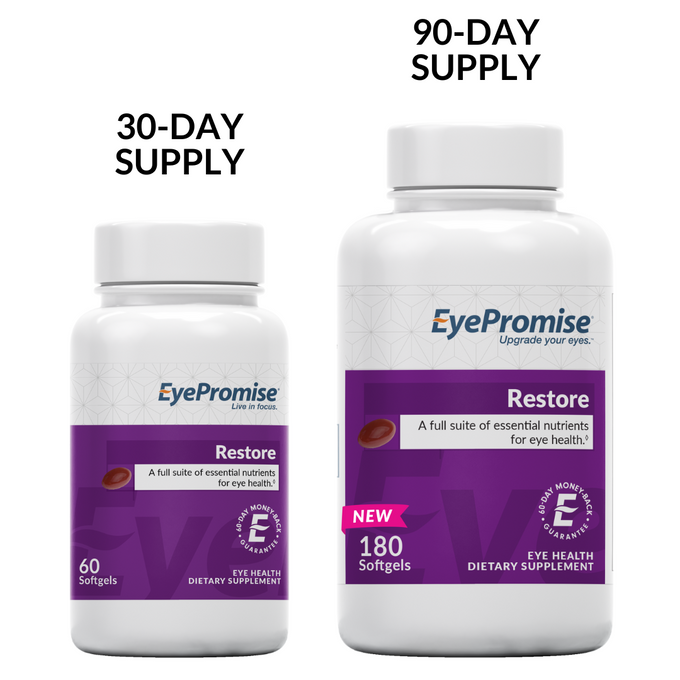
Order 1 bottle of EyePromise Restore (60 softgels per bottle) = $34.95 includes FREE shipping!
Order 3 bottles of EyePromise Restore = $32.00 per bottle (save $2.95 per bottle or $8.85 total!) includes FREE shipping!
Order 6 bottles of EyePromise Restore = $31.00 per bottle (save $3.95 per bottle or $23.70 total!) includes FREE shipping!

Have EyePromise delivered to your door on an interval that is right for you! Free Shipping on every order!
Convenience Ship – 1 bottle delivered each month
Convenience Ship – 1 bottle delivered every other month
Convenience Ship – Quarterly (3 bottles every 3 months)
Convenience Ship – Semi-Annually (3 bottles every 6 months – 1 softgel per day)
Convenience Ship – Semi-Annually (6 bottles every 6 months – 2 softgels per day)
Comments
I have just begun the Eye Promis Restore supplement about 30 days ago. As a 61 yr old female, I am quite concerned to learn that I have significantly reduced macular pigments. Everything I plan to do in retirement involves my vision in precise ways. Since menopause I have been having serious issues with short term memory and multitasking, it appears from some of the information provided here regarding Zeaxanthin that my declining macular pigment could be related to my mental decline. Hopefully, using Eye Promis Restore with help me regain some control of my memory as I continue to try to prevent AMD. In the past twelve to fifteen years I have been involved in the care of three people that have moderate to advanced AMD. It is one very frightening disease that I desperately want to prevent for as long as possible.
In addition, I have been a health information professional for the past eighteen years. I have found this group of web sites to be quite informative but some of the information may not be written at the level of understanding of the average citizen.
Janis,
Thank you for your comment. Indeed, AMD is a very frightening disease. We’re doing our best to simplify the information on this website so that it is easily understood by everyone, and we’ll keep working on it . Thank you for your comment, and keep us posted on how you’re doing with EyePromise Restore!
I’m 61 and had the same issue, much reduced macular pigments–I started taking Eye Promise religiously, and they have significantly improved the situation, to the point that now I’m in the high category with respect to the pigment. So I would expect it to work for you to.